Follow Forward with Gregory Boyle (Part 2)
Trust, Compassion, Love and Joy
Adapted from a conversation with Gregory Boyle on the Follow Forward Podcast
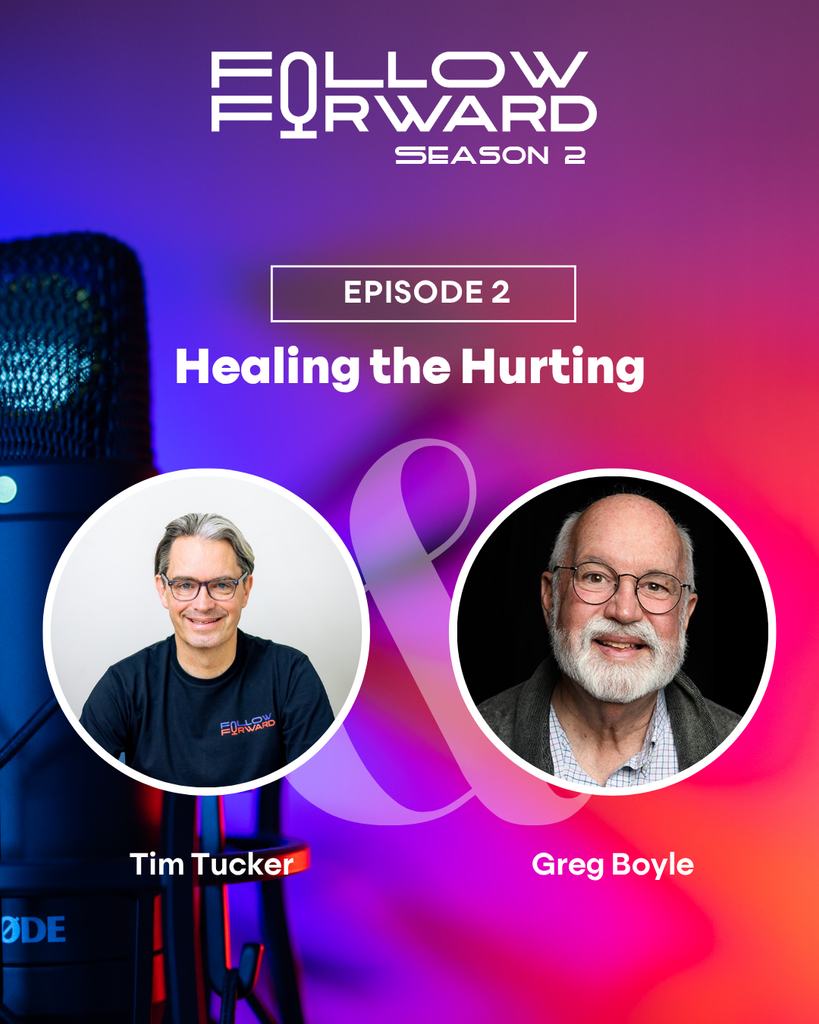
This is part two of my reflections from my discussion with Fr. Greg Boyle, founder of Homeboy Industries (click here for Part 1).
One of the aspects of our conversation that particularly encouraged me was Fr. Greg’s engagement with the central theme of the Follow Forward podcast:
“I really admire the focus of your podcast… which is about following and about going forward.”
He explained that he has previously defined the marks of authentic discipleship as “joy and fearlessness.” More recently, he has added a third: moving forward.
“…sometimes we get into this frightened stance that wants to go backwards… Part of the expectation in following is that we’re moving forward. We’re putting one loving foot in front of the next.”
I find that a wonderful summary of what Follow Forward is all about. We want to help people put one loving foot in front of the next. We can only do that if we continue to follow in our Master’s footsteps.
There are four primary ways I have observed Fr. Greg embodying this approach through his work at Homeboy Industries.
1. Building Communities of Trust
Father Greg believes that healthy people are trusting people. He suggests that many gang members struggle to trust because of the emotional wounds and trauma they have experienced. Trust, therefore, is an outcome of healing.
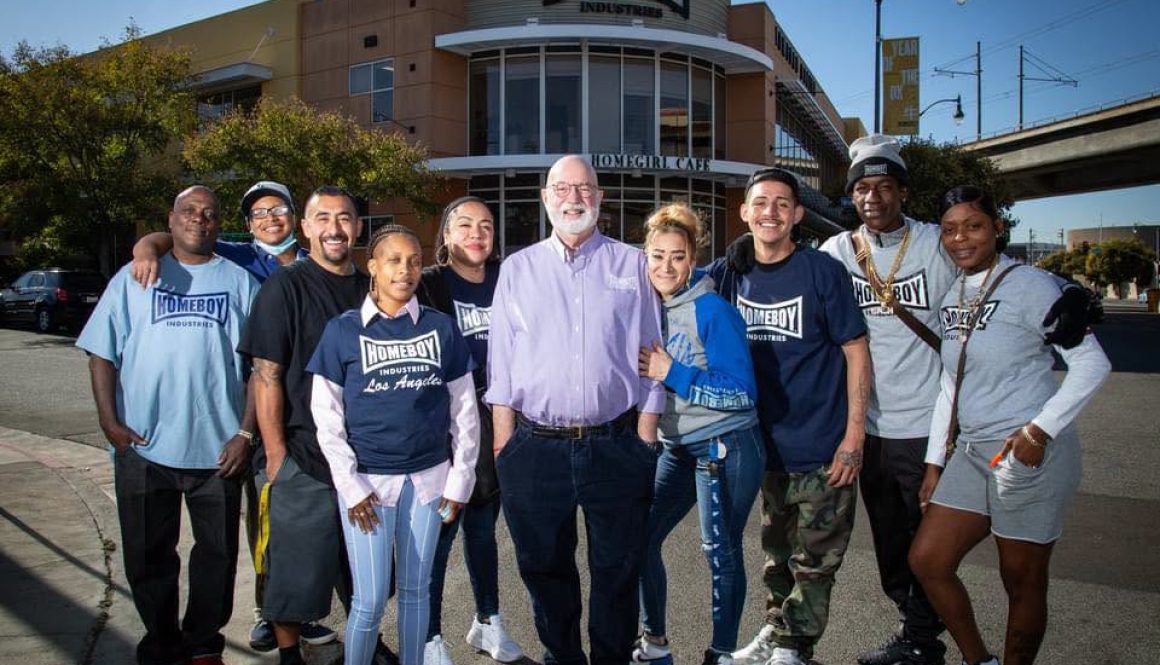
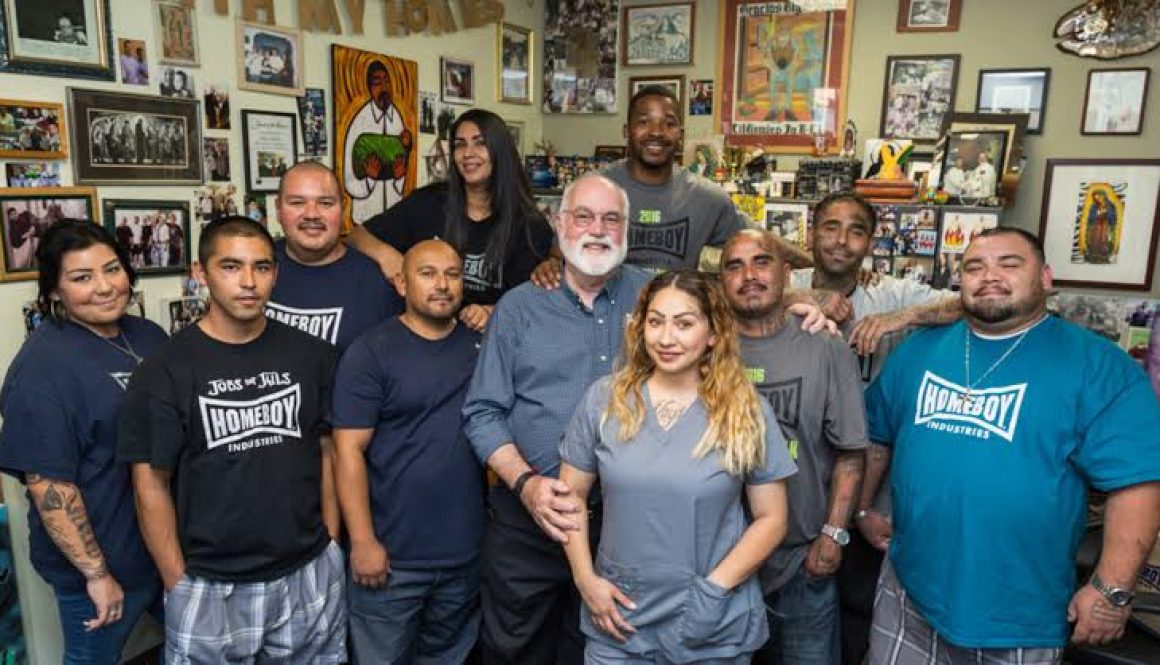
At Homeboy Industries, trust is not taught. It is cultivated through creating an environment where people feel safe, seen, and cherished.
“If people feel safe and seen and loved, then their ability to trust will grow exponentially.”
He believes that unconditional acceptance is the primary building block of trust. People begin to trust when they discover that they belong. Creating this kind of environment requires Christlike compassion.
2. Embodied Compassion
In his book Tattoos on the Heart, Boyle writes:
“Here is what we seek: a compassion that can stand in awe at what the poor have to carry rather than stand in judgment at how they carry it.”
This kind of compassion sees dignity in people, even when they fail. It refuses to write people off. At Homeboy, the goal is to create a community where no one remains on the fringes. Instead, everyone is welcomed towards the centre, where true kinship can be found.
As Boyle puts it:
“The answer to every question is compassion.”
Compassion refuses to define someone by their mistakes. It recognises that no one is beyond healing and transformation. It also invites humility, challenging us to consider where we might be had we not experienced the compassionate love of Christ ourselves.
3. Love Never Fails
Compassion is the practical outworking of love.
At its heart, Father Greg’s message is one of love. He believes love is the transformative force that restores people to who God created them to be.
Reflecting on Paul’s words that “love never fails” (1 Corinthians 13:8), Boyle argues that history cannot point to a single moment when love itself failed. He challenges us with this simple but profound observation:
“What we’ve lost really is a confidence in our love.”
In a world often driven by fear, outrage, and division, his words serve as a reminder that love remains God’s primary instrument of transformation.
4. Follow the Joy
Many people might mistakenly view ministry among the marginalised as a self-sacrificial calling requiring extraordinary endurance and perseverance.
Boyle’s experience at Homeboy offers a refreshing challenge to that perspective. His focus is on joy.
“God is only calling any of us to where our heart is and where the joy is.”
This is a beautiful correction. Following Jesus, even into the margins and the most challenging spaces of society, is ultimately an invitation into greater joy.
“He’s standing in the lowly place because that’s where the joy is.”
Questions for Reflection
Boyle’s insights invite us to consider our own journey of following Jesus:
- Are we committed to creating environments of unconditional acceptance where trust can flourish?
- Do we respond to society’s challenges with greater compassion?
- Do we truly believe that love never fails?
- Is our service leading us into deeper joy in Christ?
His final challenge is to resist viewing ministry among the marginalised through a saviour lens. Rather, it is often through this ministry that we ourselves are transformed.
“You don’t go to the margins to make a difference. You go to the margins so that the folks at the margins make you different.”
This is what it means to follow forward: putting one loving foot in front of the next, trusting that Jesus is already present in the places where He is leading us, and allowing Him to transform us along the way.
*To find out more about the Follow Forward Podcast, click here.
To listen to Father Greg’s interview, choose your preferred platform: YouTube, Apple Podcasts, or Spotify.