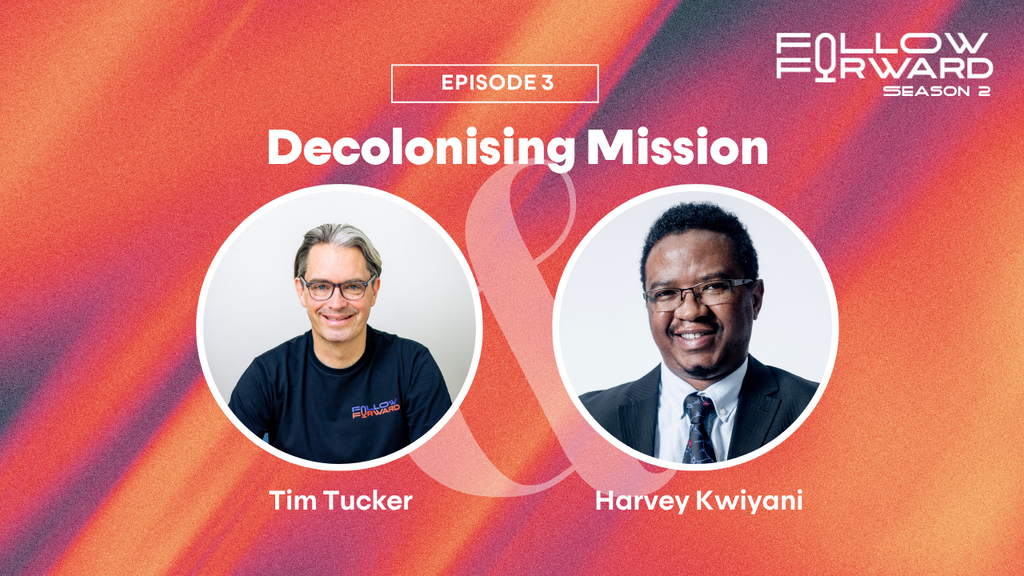
Follow Forward with Harvey Kwiyani
Mission, Migration and the Future of the Global Church
Based on my conversation with Dr Harvey Kwiyani on the Follow Forward Podcast
I have been friends with Harvey Kwiyani for almost a decade, and he has deeply challenged my thinking. I find our discussions fascinating because, in one sense, I embody much of the mission narrative that he critiques in his writings.
We might even be considered opposites.
My heritage is from an Empire. He is from a country shaped by colonial history.
I moved from the West to Africa as a missionary.
He moved from Africa to the West and actively challenges and deconstructs the Western missionary narrative.
I could go on.
Yet our relationship is built on a shared foundation: we are Kingdom people first and foremost.
In his book Multicultural Kingdom, Harvey quotes his mother, who described the Kingdom of God as a mosaic, with “each piece being in its right place and contributing to its colours.“
That image helps to describe my relationship with Harvey. He challenges the colonial DNA that has infiltrated my own thinking, which in turn helps me find my place within the mosaic of God’s Kingdom.
Grappling with Harvey’s insights is important for my missional well-being. Although his perspectives can be challenging, they consistently push me towards becoming a better follower of Christ. And that is the ultimate purpose of our Follow Forward conversations.
Here are some of the key insights that emerged from my recent conversation with Harvey on the podcast.
Mission and Empires
For many Christians, the missionary era from 1500-2000AD is associated with courage, sacrifice and the spread of the gospel. Harvey himself is descended from some of the first converts to Christianity in Malawi. Reflecting on that legacy, he says:
“I grew up celebrating the fact that we were among the first people to receive the gospel in that part of the world. But at the same time realising that the very people who brought us the gospel brought colonialism as well.”
This is the reality Harvey invites us to grapple with: mission has often travelled hand-in-glove with colonial power. He succinctly diagnoses the challenge:
“Mission has been about conquest for the past five or six hundred years.”
When we look closely at Jesus, we discover a radically different model. Jesus did not seek the Empire as an ally in mission. He did not come to colonise, but to liberate.
“Jesus is really setting people free. He’s not dominating them.”
In commissioning the disciples (Matthew 28:16-20), Jesus mobilised a colonised people without giving them colonial power. Instead, they were empowered by the Holy Spirit to carry Christ’s message of liberation to the ends of the earth. Harvey concludes,
“Mission itself, I think when done well, doesn’t need empires.”
The Liberated Taking the Message of Liberation
Harvey observes a significant shift in mission mobilisation in the twenty-first century.
He experienced this personally when he first moved from Malawi to St Gallen, Switzerland. Expecting to find Europe functioning as the centre of global Christianity, he instead discovered that many of the most vibrant Christian communities were migrant churches.
“If there was any serious Christian community in St Gallen at the time, it was mostly migrant churches. African, Asian and Latin American.”
This observation reflects broader trends across the global Church. While many Western churches have declined, Christianity has grown significantly across Africa, Asia and Latin America.
That experience led Harvey to ask two important questions:
- Where is God at work in the world today?
- What role does the global Church now play in the West?
We are living through a seismic shift in global mission. For centuries, mission was widely understood to move from the West to the Rest of the world, often alongside colonial expansion. Today, however, missionaries are increasingly migrants, students, workers and ordinary believers moving across borders and cultures.
Mission is no longer simply flowing from West to East or North to South. Increasingly, it is moving from the Rest to the West.
Having been transformed by the gospel, believers from Africa, Asia and Latin America are bringing the message of Christ back to places once regarded as the primary “sending nations”.
Harvey poses a provocative question: What if migration is one of God’s greatest mission strategies?
In many ways, this has always been true throughout church history. The difference today is not the movement itself, but the nationality, skin colour and cultural backgrounds of those who are moving.
God is Already at Work
Reflecting on the missionary movements of previous generations, Harvey offers an important reminder:
“The missionaries did not bring God. God was already at work.”
And God remains at work today, often in diverse and surprising ways across the world.
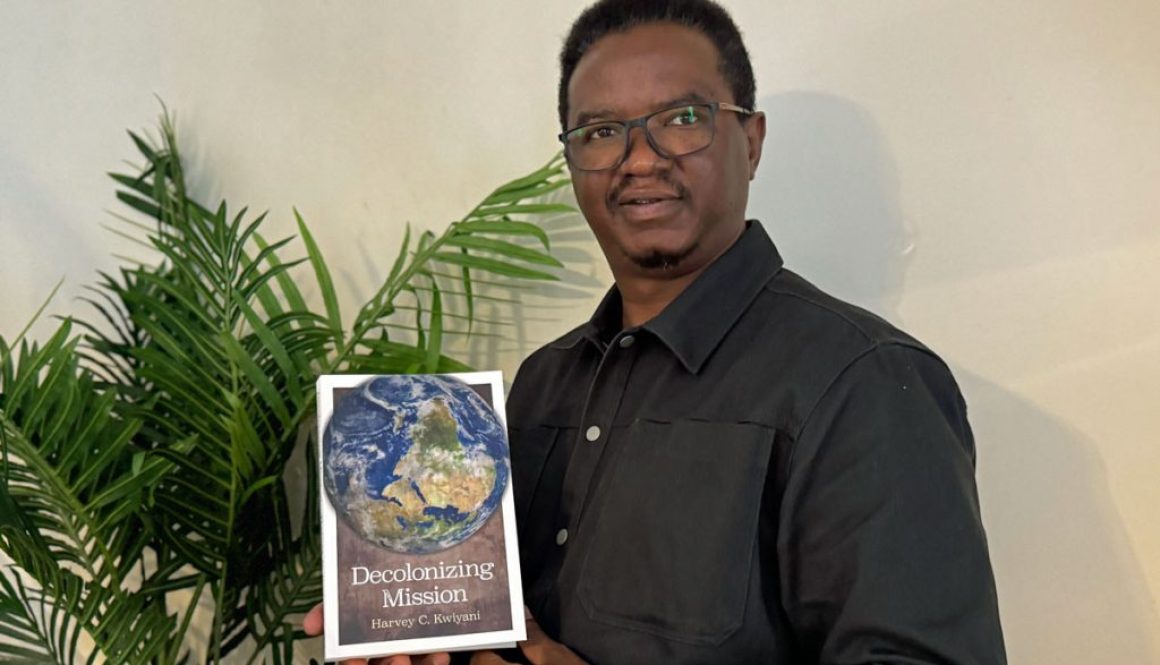
To discern what He is doing, the work of decolonising mission is critically important (and this is the subject of Harvey’s latest book – Decolonising Mission). It calls us back to Christ’s example and the way He mobilised the first disciples. It requires humility instead of superiority, liberation instead of domination, and mutuality instead of dependency.
As you reflect on Harvey’s insights, consider these same questions of Harvey:
- Where do you see God at work in the world today?
- What role do you believe the global Church should now play in the West?
And please consider how you can pray for and practically support this emerging mission movement.
The future of mission will not be driven primarily by institutions or empires. It is shaped by ordinary followers of Jesus who cross cultures, build friendships and share the good news of liberation because, as Paul reminds us, “it is for freedom that Christ has set us free” (Galatians 5:1).
*To find out more about the Follow Forward Podcast, click here.
To listen to Dr. Kwiyani’s interview, choose your preferred platform: YouTube, Apple Podcasts, or Spotify.