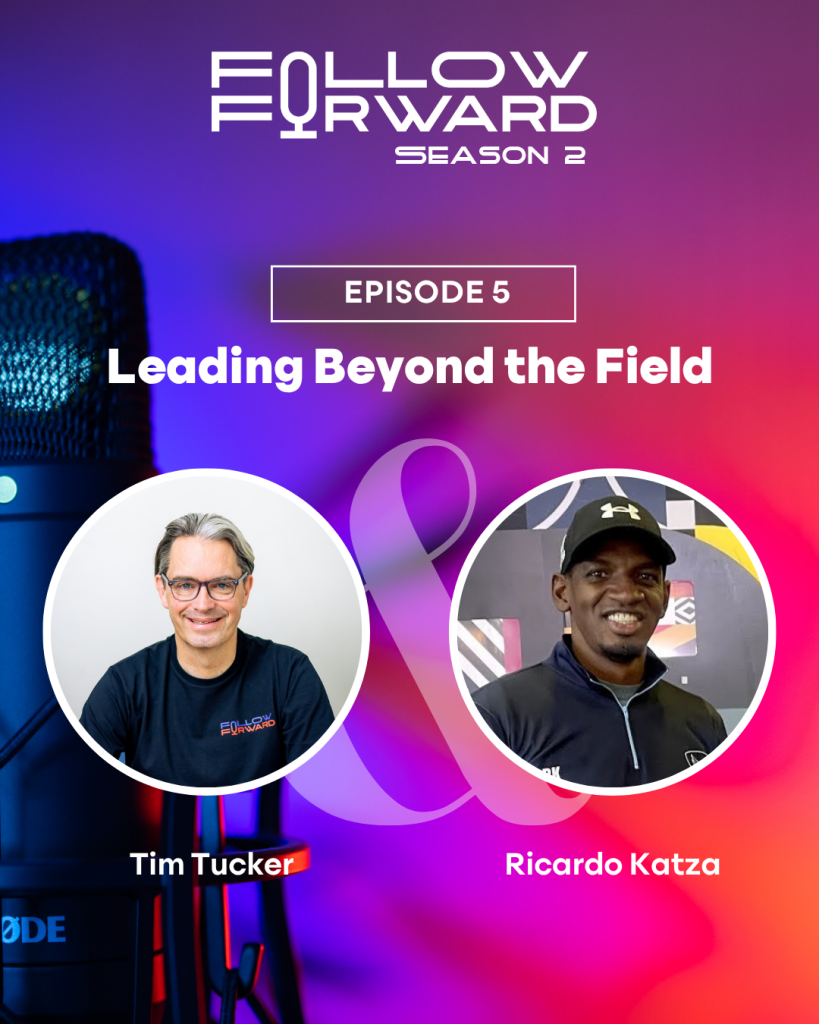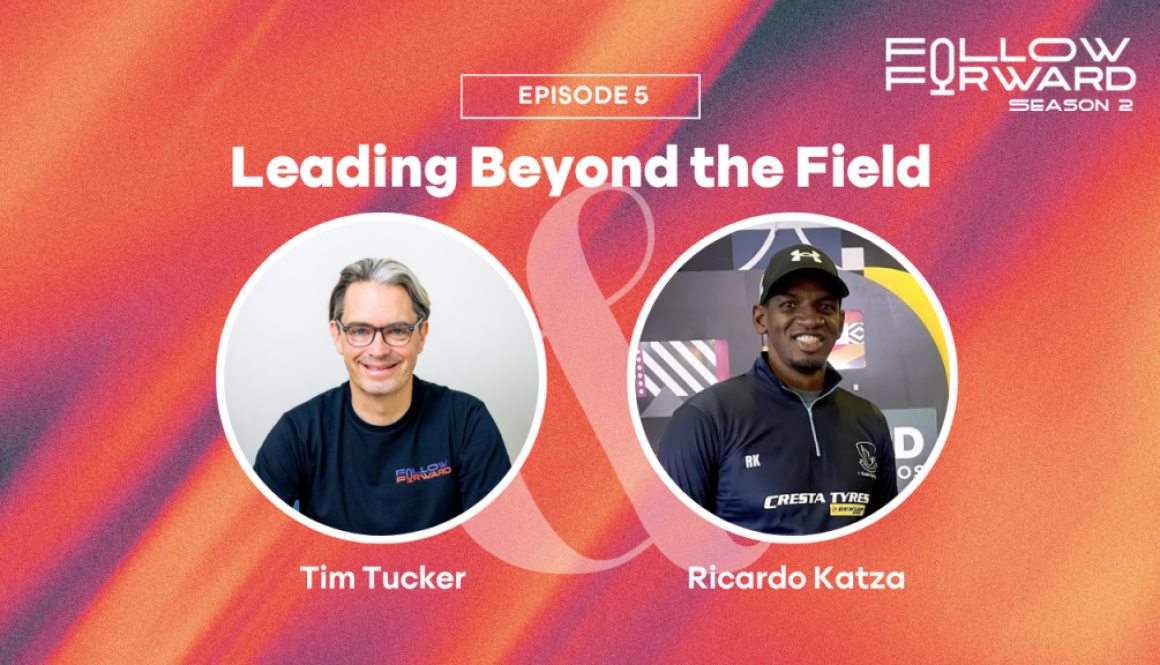
Follow Forward with Ricardo Katza
What Does It Take to Reach the Top?
Based on my conversation with Ricardo Katza on the Follow Forward Podcast
What does it take to be an elite footballer and play at the highest level?
Most elite footballers follow a familiar pathway. They are spotted at a young age, join an academy, progress through the age-group ranks, and eventually earn their opportunity in the professional game. Along the way, tens of thousands of aspiring players never make it.
Ricardo Katza is one of the exceptions.
After all, he retired from football at just 14 years old to pursue a very different path: life in the gangs of the Cape Flats.
“I stopped playing football because I got involved in so many things that the Cape Flats offers young people that don’t have a vision… I ended up abusing drugs, alcohol abuse. I was a part-time gangster.”
His story is a remarkable turnaround. From gang life on the streets of Mitchell’s Plain to becoming captain of Bafana Bafana, South Africa’s national football team.
Choosing to Follow
Ricardo’s turning point came at the age of 18 when he became a Christian and committed his life to following Jesus.
Shortly after his conversion, he began reading the Bible secretly while living with his Muslim father. When his father discovered the Bible, he presented Ricardo with an ultimatum: renounce his new faith or leave home.
Ricardo recalls:
“My dad had the Bible in his hand and said, ‘I’m giving you a choice. Either you stay and become Muslim, or you leave my house.’ I said, ‘Dad, as much as I love you, I’ve decided to follow Jesus.'”
Choosing to follow Christ, Ricardo packed two shopping bags, walked to his grandmother’s house, and was welcomed by relatives who told him they had been praying for him and expecting his return.
The Unlikely Career Path
Even after this dramatic life change, becoming a professional footballer was the furthest thing from Ricardo’s mind.
He was simply playing recreationally for his church team when his uncle arranged a trial with Cape Town club Seven Stars. After an unconvincing trial as a striker, he was given a second opportunity in a defensive role. That chance changed everything.
A professional contract followed, leading to spells at Seven Stars, Ajax Cape Town, Avondale and Hellenic. It was at Hellenic that his career truly began to flourish before earning a move to SuperSport United.
Over a 14-year professional career, Ricardo played almost 400 PSL matches, won three league titles and represented Bafana Bafana on the international stage. His leadership qualities saw him captain both club and country.
Yet his identity was never defined by success on the football field.
“My identity was not in how many games I won, how many games I lost or how great the game was… My identity is not in football. My identity is in Christ.”
The Cost of Followership
Even as a committed Christian, Ricardo’s football career was far from straightforward.
At times he had to take a stand for his faith when superstitious practices, commonly referred to in South Africa as muti, took place in the dressing room.
He told his coach:
“I would rather you take me out of the team than for me to be part of this.”
His coach agreed that he could pray on his own. In time, that openness led to Ricardo being given the opportunity to lead the entire team in prayer.
Faithfulness was also tested during periods of injury and disappointment. Looking back, Ricardo believes some of his greatest growth came during the seasons when he was not playing.
“In the 14 years I played professionally, the two years that I’ve been on the bench watching from the outside, I’ve actually learned so much more than when I was playing.”
This helped prepare him for life beyond professional football.
Managing Transition
While still playing, he invested in coaching qualifications and developed a clear vision for working with young people. As a result, he was able to transition successfully from professional football into youth coaching and leadership.
“My faith has really been the cornerstone of my life.”
He also knew what mattered most.
“There’s always two things that I wanted to remain when I’m done with football. That was my relationship with God and my family.”
Today, Ricardo recognises that his role extends far beyond coaching football. His passion is investing in young people as a mentor, father figure and role model.
“Football is just a vehicle, it’s just a tool that can get the kids. But once the kids are there, you actually become a father to them.”
He believes coaching is about developing the whole person, not simply improving athletic performance.
“If you only coach the game, you will lose the kid. But if you coach the game and the kid, the kids will actually bring the results.”
Practical Leadership
Many people view professional sport as the pinnacle of achievement. Ricardo’s story offers a different perspective and leaves us with two important questions:
- What is shaping your identity most deeply right now?
- Where is God asking you to lead with conviction rather than comfort?
Through his career and experiences, Ricardo has discovered principles that apply far beyond football. It begins with remaining faithful to God in every season of life.
“Before we seek the fame, let’s look at that stability. Let’s look at that person, which is God, that will stabilise your life so that when the storm comes you will be able to stand strong.”
And it continues through integrity, where actions consistently match words.
“A leader doesn’t just speak about things, he actually sets an example.”
*To find out more about the Follow Forward Podcast, click here.
To listen to Ricardo’s interview, choose your preferred platform: YouTube, Apple Podcasts, or Spotify.